
What Good Is Reactive Behaviour? The Light and the Dark Side
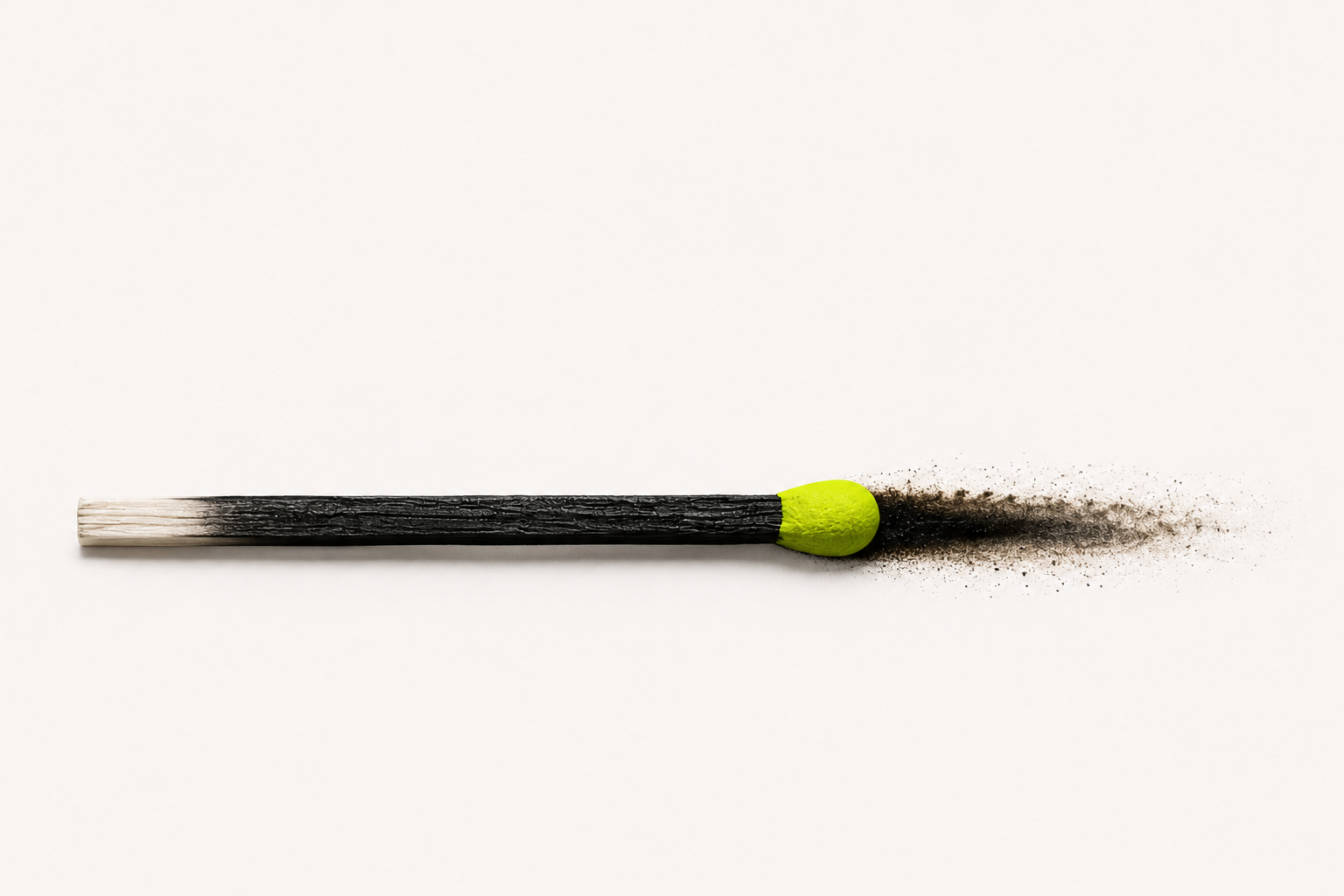
There is a moment, milliseconds long, in which your body decides something before you do.
A colleague challenges your numbers in front of the board. Your chest tightens. Your voice sharpens, or goes quiet, or gets very, very reasonable. By the time your conscious mind arrives at the scene, the decision has already been made. You are reacting.
We talk about reactive behaviour as though it were a design flaw. It isn't. It's the oldest, fastest, most reliable system you own — and understanding what it's for is the only honest way to understand what it costs.
THE LIGHT SIDE: REACTIVITY IS PROTECTION THAT WORKS
Reactive behaviour exists because it kept you alive. Not metaphorically — literally. The neuroscientist Joseph LeDoux mapped the wiring: a threat signal can reach the amygdala by a fast, crude subcortical route in around twelve milliseconds — while becoming consciously aware of the same event takes closer to 250 to 300. Your body has already braced before you know what happened. When a car swerves into your lane, you don't deliberate. You act. That speed is a gift.
And the gift extends well beyond physical danger. Somewhere in your early life, you learned which behaviours kept you safe in your particular environment. Perhaps smoothing things over stopped the shouting. Perhaps going quiet made you invisible when invisible was the safest thing to be. Perhaps taking charge meant nobody could let you down. These weren't weaknesses. They were intelligent adaptations — precise solutions to the environment you actually lived in.
Reactivity also carries information. The tightening in your chest before you say yes to something you don't want to do is data arriving faster than language. Leaders who learn to read that signal — rather than obey it or suppress it — have access to an early-warning system no dashboard can replicate.
So let's be clear: reactive behaviour is not the enemy. It is protection, pattern recognition and speed, bundled into one system that never sleeps.
THE DARK SIDE: YESTERDAY'S PROTECTION, TODAY'S TAX
The problem is not that the system exists. The problem is that it cannot tell the difference between a sabre-toothed threat and a status update.
Research from the Leadership Circle, drawing on hundreds of thousands of leadership assessments, suggests that roughly three in four leaders operate predominantly from reactive patterns — behaviour organised around avoiding threat rather than creating outcomes. Their competence is real. Their strategy is sound. But under pressure, the old code runs: they smooth, they defer upwards, they go quiet, they shut the conversation down, they defend, they take over, they firefight.
Each of these behaviours works — briefly. Smoothing dissolves tension in the room. Taking over gets the deliverable out of the door. That's precisely why the patterns survive: they are rewarded in the short term, every single time.
The cost arrives later, and it arrives as absence. The conversation that didn't happen. The risk nobody named. The talented person who stopped offering ideas because the last three were deflected. Crucial Learning's research puts a price on a single avoided conversation — around $1,500 in wasted time and workaround effort — and no leader avoids just one. Multiply it across a year, across a team, and reactive behaviour stops being a personality quirk and becomes a line item.
The dark side of reactivity, then, is not the behaviour itself. It's the repetition of a behaviour designed for a threat that ended years ago.
THE REAL QUESTION
The question is never "How do I stop being reactive?" You won't. The wiring predates you and it will outlast every leadership course you attend.
The better question is: what is this reaction still protecting me from — and is that threat still real?
When a leader can see the original logic of their pattern — what it was built for, what it once earned them — something shifts. The behaviour loses its grip not through willpower but through visibility. What was automatic becomes optional. And a leader with options is a very different animal from a leader with reflexes.
Reactive behaviour got you here. It just can't take you where you're going.